01
Monitor existing camera feeds
Apply ProvenienceX AI monitoring to camera views covering shared aisles, loading areas and other vehicle–pedestrian interaction points.
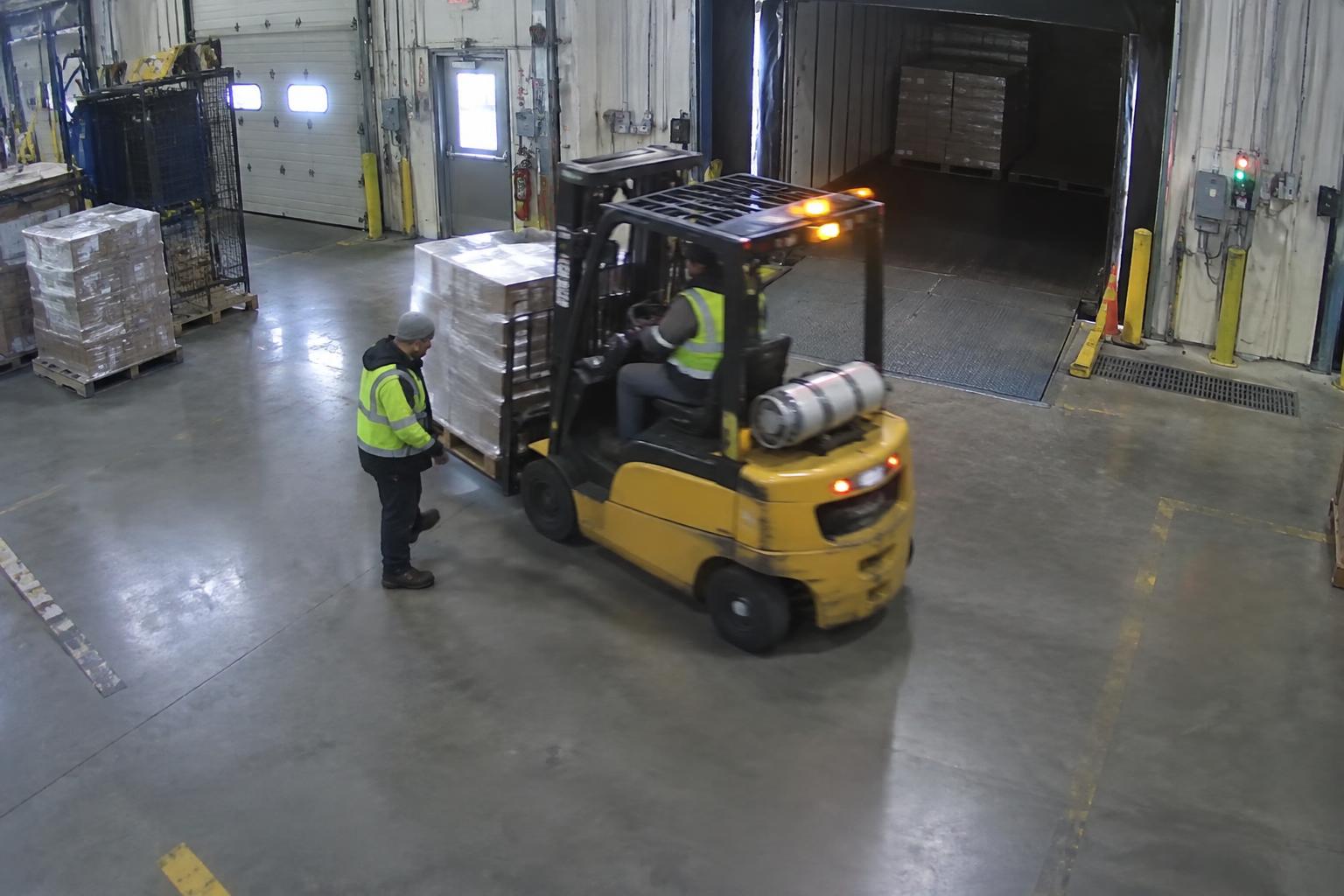
Detect when a person enters the travel path or line of fire of a moving forklift, route real-time alerts and reveal recurring exposure patterns using existing factory camera feeds.
Input
Existing CCTV
Detection
Line-of-fire exposure
Response
Real-time alerts
The safety challenge
Shared aisles, loading bays and shipping routes create changing interactions between forklifts and pedestrians. A person can enter an active travel path before a supervisor sees the exposure.
ProvenienceX AI adds an AI monitoring layer to relevant camera feeds so the safety team can detect the event, trigger its response process and investigate where the pattern repeats.
Monitoring supports—not replaces—site controls, traffic separation and qualified EHS review.
Detection to response
Apply ProvenienceX AI monitoring to camera views covering shared aisles, loading areas and other vehicle–pedestrian interaction points.
Identify when a pedestrian enters the active travel path or line of fire of a moving forklift within the monitored view.
Send local audio or visual warnings and notify supervisors through the factory’s defined response channels.
Compare detected exposure by area, shift and time to help EHS teams prioritize investigation and corrective action.
Where to focus
Detection data gives safety teams a clearer view of where forklift and pedestrian interactions need closer investigation.
Monitor areas where people and forklifts regularly move through the same operational space.
Surface repeated proximity events around corners, shipping routes and constrained visibility zones.
Connect detection to the local warning and supervisor response defined for each monitored area.
Anonymized bottling plant
Existing CCTV uncovered a critical forklift–worker exposure in a shipping blind spot. Floor audio alerts, corrective actions and targeted behaviour-based counselling were followed by a 90% reduction in detected critical alerts over one month.
Customer identity is withheld. This result reflects one specific deployment and is not a guarantee of outcomes at other sites.
Read the full case study90%
reduction in critical forklift–worker proximity alerts
Existing CCTV · floor audio alerts · one-month measured period
Forklift safety FAQ
Practical answers for EHS and operations teams evaluating camera-based monitoring.
Forklift proximity detection monitors vehicle–pedestrian interactions and identifies when a person enters a defined risk area, such as the active path or line of fire of a moving forklift. ProvenienceX AI uses factory camera feeds to support this monitoring workflow.
Yes. ProvenienceX AI is designed to analyze existing factory camera feeds. Each site should still review camera position, visibility and blind spots to confirm that the relevant interaction areas are covered.
Alerts can be routed through floor audio, smart lights, email documentation and mobile channels. The appropriate route depends on the severity, work area and response process defined by the factory.
Teams can compare detected forklift proximity exposure by area, shift and time. Recurring patterns can help focus investigations, camera reviews, worker counselling and corrective actions.
No. AI monitoring is decision support. Qualified EHS professionals should validate hazards, assess the site, select controls and approve response procedures. Physical separation and other site controls remain essential where the risk assessment requires them.
Describe the vehicle–pedestrian interaction at your site and get a prioritized monitoring recommendation for your EHS team to review.